How Sporting Skills Grow Through Repetition and Reflection
Sporting skills practice becomes more useful when you connect each drill to a clear cue, relevant feedback and a decision about what to try next.
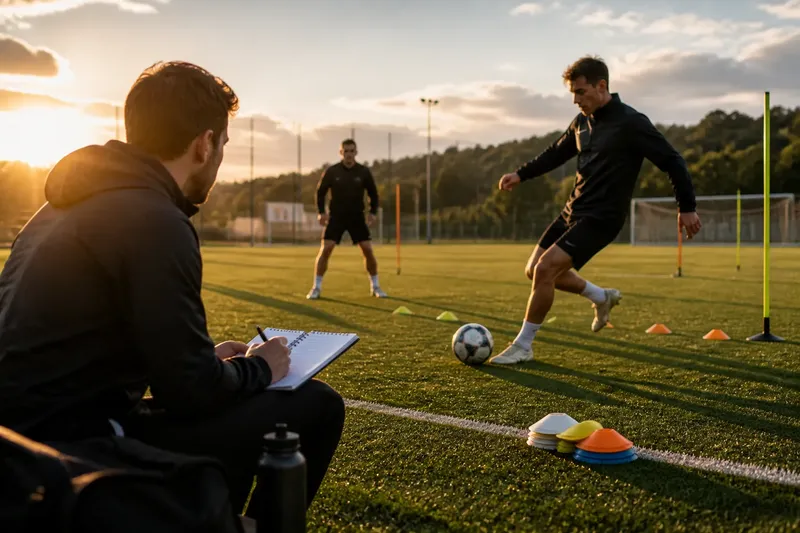
A common mistake in sporting skills practice is treating every repetition as interchangeable: finish the drill, count the attempts and move on. That can leave an athlete with a familiar movement but no clear sense of which part needs attention. A better session gives each task a question to answer, then uses what happened to choose the next task.
The right format depends on the problem. A simple drill can help isolate a movement, a coach can offer an outside observation, and a game-like task can show whether a skill holds up amid decisions. These formats work together; the useful choice is the one that makes the next attempt easier to interpret.
What should a useful repetition tell you?
A repetition is more informative when it has a specific cue: keep the head steady through contact, land quietly, or send the ball towards a selected area. The cue directs attention to one observable part of the movement instead of asking the athlete to judge the whole performance.
An imperfect attempt can still provide useful information. If a ball keeps travelling wide, note where it goes and consider one possible factor, such as starting position or timing, rather than changing several parts of the movement at once.
Deliberate practice means arranging a task around a particular skill or limitation, with a clear focus and a way to notice what happened. It differs from casual play, which can build enjoyment and broad experience without asking the athlete to examine one component in detail.
Which practice format suits the current difficulty?
Isolated drills, coach feedback and representative practice answer different questions. An athlete might move between them within a session, using a simpler task to clarify a cue and a more demanding one to see whether the cue remains useful.
When is an isolated drill a good choice?
An isolated drill reduces competing demands. A basketball player working on a set shot can attend to balance and release without also reading defenders or moving around a crowded court. It can help when a movement component needs attention, when an athlete is returning to a basic cue, or when full play is not available.
A controlled drill cannot by itself show that the skill will transfer to competition. Once the movement is easier to attend to, introduce some variation rather than treating the drill as the final destination.
What can a coach’s feedback add?
A coach may notice a detail that is difficult to feel in the moment, such as a posture change before a throw. This can help when the cause of an error is unclear or several self-corrections have become confusing.
Ask for one observation at a time, then try a short run of attempts before requesting another cue. That gives the athlete room to notice the movement and judge whether the observation is useful, instead of waiting for an instruction after every attempt.
When does representative practice matter?
Representative practice includes features that shape competition, such as an opponent, a changing target or a decision. A footballer might receive and pass while a partner closes space, rather than passing repeatedly to an unopposed target.
If several demands make an error difficult to interpret, simplify the task briefly and focus on one element. Then restore the more realistic conditions to reconnect the movement with the choices it must support.
How can feedback and reflection guide the next session?
Feedback may come from a coach, teammate, training partner or the athlete’s own senses. Video can help answer a defined question, such as whether the front foot lands before a throw; watching footage without a question can leave the athlete with impressions but no next action.
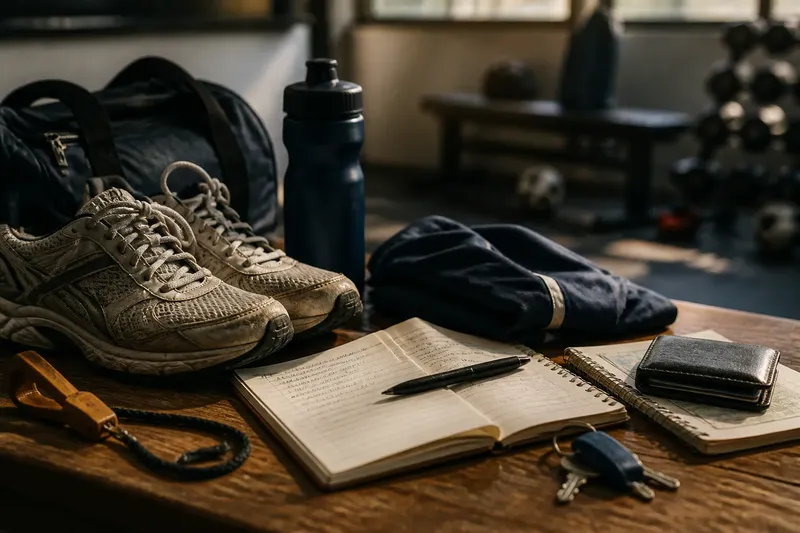
After a short block, note the task, the cue, what you observed and what you will keep or change. A paper diary is enough, while a notes app may suit someone who already records training there. Keep the note brief and focused on a decision, not a catalogue of errors.
Say you are a tennis player and your forehand repeatedly lands long in a controlled drill. You choose the cue “finish with the racquet travelling across the body” and ask a training partner to watch the finish on a short set of attempts; if the finish becomes more consistent but the ball still travels long, you keep that observation and next examine contact or target choice rather than assuming the cue fixed the whole stroke.
Reflection is useful when it changes what you do next. Keep a cue that helps you notice or control the movement, revise one that offers no clear signal, and ask a coach when the cause remains uncertain.
Why can a new skill feel less reliable at first?
A changed movement can feel awkward because the athlete is attending to something that previously happened without conscious thought. Performance may vary while the adjustment is being learnt; one difficult session alone does not show that the change is wrong.
Skills also respond to context. A movement that feels steady in a quiet drill may be harder when an opponent, fatigue or a tactical choice enters the task. Practising in suitable variations helps the athlete see where the cue remains useful and where the task needs adjusting.
Look beyond whether a session felt smooth. Consider whether you can recognise the movement, explain the cue, use it in a changing task and recover after an error. Those observations give a fuller picture of learning than a single result.
How should you choose the next practice format?
Start by naming the question. If you cannot describe the movement to work on, ask a coach to help identify a focus. If you know the movement but cannot feel or repeat it, simplify the task; if the cause is unclear, seek a focused observation; if the skill disappears in play, add a representative task.
- Check whether the movement has one clear component to practise. If it does, choose an isolated drill; if several demands are obscuring it, simplify the task or ask a coach to help select a cue.
- Check whether you can identify the cause of the error. If you cannot, ask a coach or training partner for one specific observation; if you can, test one adjustment rather than changing several at once.
- Check whether the skill works only in a predictable setting. If it does, add an opponent, changing target or decision; if it already holds up in that task, vary another relevant condition.
- Check whether the current task produces errors you can interpret. If it does, continue and note the cue; if it does not, reduce one demand and return to the harder version once the observation is clearer.
- Check whether feedback changes what you notice. If it does, keep the cue for another short block; if it does not, ask for a different observation or return to your own movement cues.
- Check whether your notes point to a concrete next action. If they do, begin the next session with that task; if they do not, record one observable question instead of adding a broad judgement about performance.
What questions help you adjust practice?
What is deliberate practice in sport?
Deliberate practice is a focused task arranged to work on a particular skill or limitation, with attention to what happens. It may include a simple drill, feedback or a decision about how to vary the task.
Should athletes practise a skill in isolation or in a game?
Use isolation when a movement component needs attention without competing demands, then add game-like conditions to see how it works with decisions and pressure. If the skill is already reliable in a changing task, further isolation may not answer the question you have.
How should athletes use video feedback?
Decide what you want to see before recording or reviewing footage, such as the timing of a foot landing. If the clip does not answer that question clearly, ask a coach to help interpret it rather than drawing a broad conclusion from one image.
What should an athlete record after practice?
Write down the task, the cue, one observable result and the next decision. A short note in a training diary or notes app is easier to use than a long account of every attempt.
Sporting skills practice becomes more adaptable when each format serves a clear purpose: a drill can clarify a movement, feedback can sharpen attention, and representative practice can connect the skill to competition. The next useful question may change as an athlete’s career develops, so keep the record focused on what the current task reveals and what that makes sensible to try next.